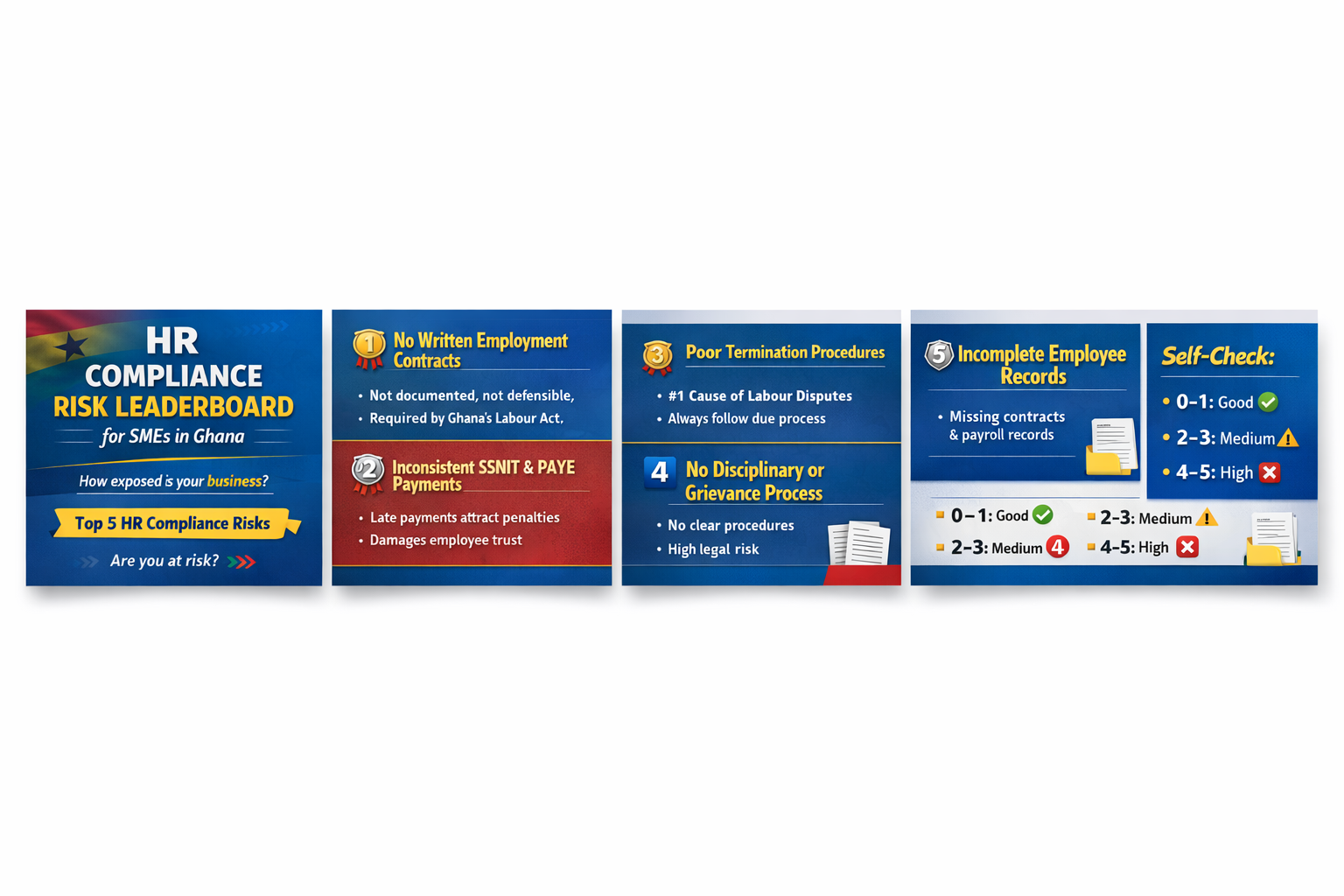
Let’s be honest: HR compliance isn’t the most exciting part of running a business. But here’s the thing—it’s one of the most important. And if you’re running a small or medium-sized business in Ghana, getting it right isn’t just about ticking boxes or avoiding fines. It’s about creating a workplace where people feel secure, valued, and productive.
The reality is simple: whether you’re managing a team of 5 or 200, Ghanaian labour laws apply to you. But don’t worry—this isn’t as overwhelming as it sounds. Think of this checklist as your practical guide to staying compliant while building better HR practices along the way.
- Employment Contracts and Documentation
Here’s where everything begins: proper documentation. Every employment relationship in Ghana needs to be formalized in writing, and that’s not just bureaucracy—it’s protection for both you and your employees.
What you need to do:
- Issue a written employment contract within two months of hiring someone
- Make sure each contract spells out the essentials: job title and responsibilities, salary and how often it’s paid, working hours, leave entitlements, probation period (if there is one), and notice period for termination
- Keep copies of all contracts safely filed
- Have clear job descriptions for every role in your organization. (GHR experts can draw out Key Performance Indicators from these JDs).
When everyone knows what’s expected from day one, you avoid confusion and conflict down the line.
- Statutory Registrations and Contributions
This is where many businesses trip up—not because they don’t want to comply, but because the requirements can feel complex. Let’s break it down.
Your compliance checklist:
- Register your business with SSNIT (Social Security and National Insurance Trust) and GRA for PAYE
- Enroll every employee on SSNIT from their very first day.
- Pay monthly SSNIT contributions: 13% from you as the employer (Tier 1), 5.5% deducted from the employee’s salary (Tier 2)
- Deduct and remit PAYE to GRA on time, by the 15th of every month.
- Set up a Tier 2 pension scheme and make regular contributions to your custodian of choice. Evaluate each one to determine the best choice for your team.
- Keep detailed records of every payment you make
Think of these contributions not as costs, but as investments in your employees’ futures and in staying on the right side of the law.
- Working Hours, Leave, and Wages
How you structure work time and compensate your team speaks volumes about your business.
Stay compliant by ensuring:
- Working hours don’t exceed 8 hours daily or 40 hours weekly
- You have a clear overtime policy that everyone understands. Take note there is a special structure for calculating and taxing overtime. Speak to Ghana HR.
- Salaries meet or exceed the national daily minimum wage. Current wage: GH₵21.77 per day.
- Employees get at least 15 working days of annual leave
- Public holidays are either observed or properly compensated.
- Sick leave is managed fairly, with medical evidence when needed. This should be captured in your handbook.
- Female employees receive a minimum of 12 weeks maternity leave
These aren’t just legal requirements—they’re fundamental to maintaining a healthy, balanced workforce.
- Health, Safety, and Welfare
Your employees spend a significant portion of their lives at work. You have both a legal duty and a moral obligation to keep them safe.
Make sure you:
- Provide a workplace that’s safe and hygienic
- Implement basic health and safety measures appropriate to your industry
- Have first aid provisions readily available
- Train your team on potential workplace hazards
- Establish clear procedures for reporting incidents and accidents
- Document and properly address any work-related injuries and near misses.
A safe workplace isn’t just compliant—it’s productive. Ghana HR Solutions can help train your employees on Health and Safety.
- Employee Records and Data Protection
Good record-keeping might sound tedious, but it’s absolutely essential for both legal compliance and smooth operations.
Your record-keeping should include:
- Complete personal files for each employee (contracts, IDs, SSNIT numbers)
- Accurate attendance and leave tracking
- Comprehensive payroll records
- Secure storage of confidential employee information
- Restricted access to sensitive data—only authorized personnel should have it
- Adherence to data protection principles
Think of these records as your business’s memory. When managed well, they protect everyone involved.
A good Human Resource Information System should help handle this. The GHRStaffcenter is Ghana HR Solutions’ proprietary cloud-based HRIS software, which is powered by AWS. Visit www.ghrstaffcenter.com to schedule a demo.
- Disciplinary and Grievance Procedures
Nobody enjoys difficult conversations, but how you handle workplace issues can make or break employee trust.
Ensure you have:
- A documented disciplinary policy that’s clearly communicated
- Step-by-step processes for managing misconduct
- A commitment to hearing employees out before imposing any sanctions
- A grievance procedure that employees can actually use
- A system for documenting and resolving complaints fairly
- Zero tolerance for unfair or summary dismissals
Due process isn’t optional under Ghanaian labour law—it’s mandatory.
Fairness in handling problems builds respect and credibility in your organization.
- Termination and Exit Management
Whether someone is leaving voluntarily or being let go, how you handle exits matters legally and reputationally.
Follow these steps:
- Respect notice periods as specified in contracts or required by law
- Calculate any payment in lieu of notice correctly
- Pay all final salary and outstanding entitlements promptly
- Complete proper exit documentation
- Update SSNIT and pension records
- Issue a certificate of employment when requested.
A professional exit process leaves the door open for positive references and protects you from potential disputes.
- HR Best Practices (Strongly Recommended)
Not everything on this list is legally required, but these practices will strengthen your compliance and make your business run smoother.
Consider implementing:
- A comprehensive employee handbook
- A structured onboarding process for new hires
- A performance management system
- Regular training and development opportunities
- Clear reporting lines and accountability structures
- Periodic reviews of your HR policies
These practices turn compliance from a checkbox exercise into a genuine competitive advantage. Once again, a good HRIS can help operationalise all of the above and make HR more effective.
Truth
Here’s the truth: HR compliance isn’t optional. It’s both a legal obligation and a smart business decision. Many SMEs in Ghana struggle with compliance not because they’re trying to cut corners, but because they simply don’t have structured HR systems in place.
By working through this checklist, you’ll:
- Dramatically reduce your legal and compliance risks
- Build stronger, more trusting relationships with your employees
- Enhance your credibility with regulators, partners, and clients
- Create a more engaged and productive workforce
Not sure where your business stands? A professional HR audit or compliance review can help you identify gaps and develop practical solutions tailored to your needs.
Remember: investing in proper HR compliance today saves you from costly problems tomorrow. And more importantly, it helps you build the kind of workplace where both your business and your people can thrive.
At Ghana HR Solutions, we help SMEs:
-
Identify compliance gaps
-
Fix them practically and legally
-
Put simple HR structures in place
-
Stay compliant while focusing on growth
Not sure where you stand?
Request an HR Compliance Review and get clarity before issues escalate.
www.ghanahrsolutions.com
Speak to our HR consultants today- 0302797657, 0200181695